Dundee Advertiser, Tuesday May 19 1863
Extraordinary Narrative
To the Editor of the Dundee
Advertiser
Sir,
By this mail I send you a
newspaper containing the narrative of a man being in captivity amongst the
natives on the northern shores of this continent for seventeen years. He was
shipwrecked from the ship Peruvian, be-longing to Dundee. The
Captain and his lady be-longed to Fife.
By publishing the narrative
in your journal, it may be the means of easing the mind of some anxious
relatives or friends as to their sad fate.
I am yours, &c,
J. Ramage,
Rosebank Cottage,
Abbotsford Street,
West Melbourne,
26th March 1863.
In verification of the
extraordinary narrative published below, we may state, as the result of our inquiries,
that the barque Peruvian was built at Arbroath in the year 1841, by Messers
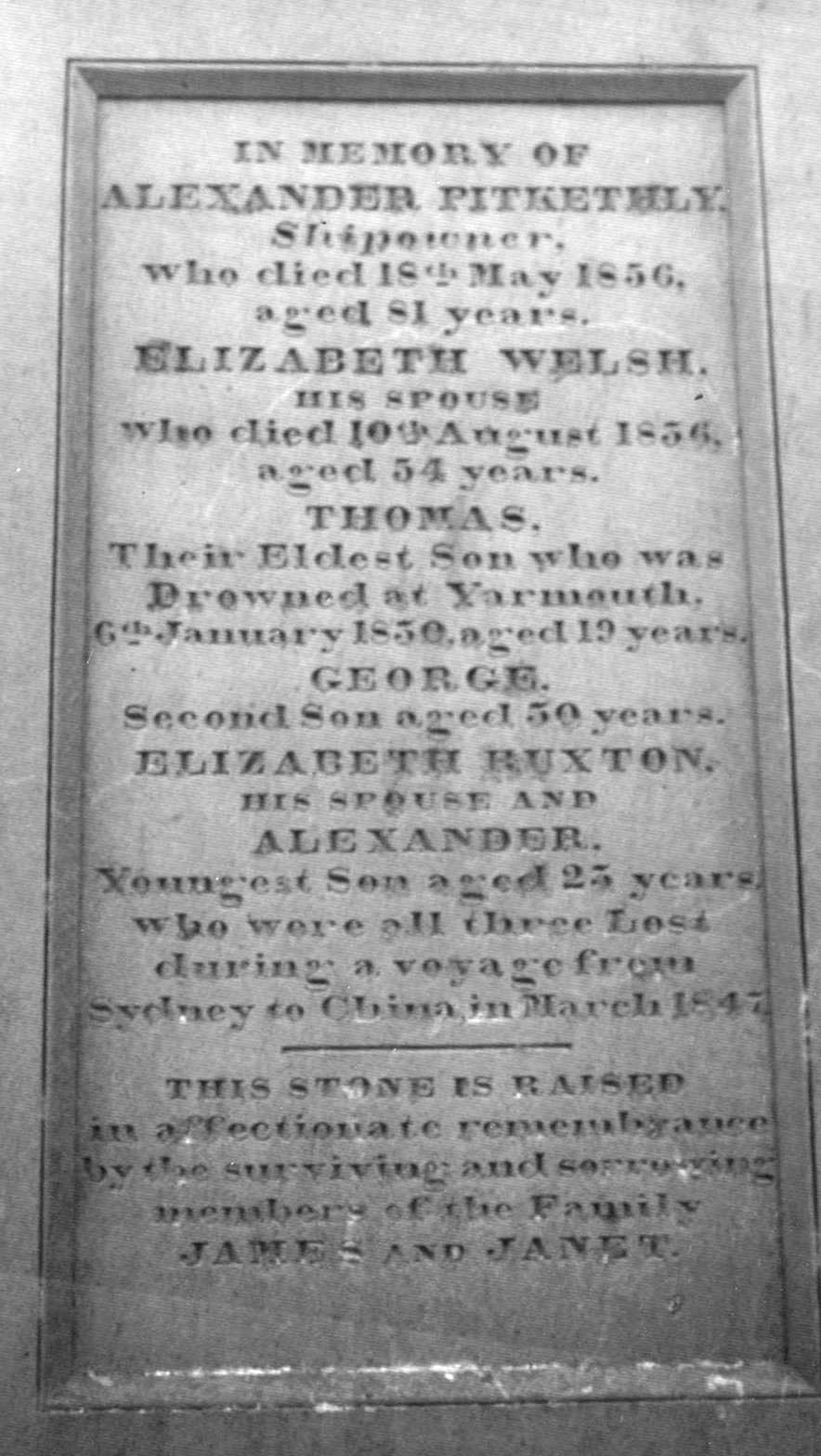
Alexander Stephen & Sons and was purchased by Mr. Pitkethly, of Newburgh,
Fife who was a retired ship Captain, and who made his son master of the new
vessel.
Young Pitkethly married a
daughter of Mr. Ruxton, keeper of the Ship Inn at the shore, Dundee, and she
accompanied him in a voyage from London to Sydney in February 1845.From Sydney
the Peruvian sailed to China, returning from China to Sydney, and she was
sailing back again from Sydney to China in the year 1846 when she was lost in
the manner described below.
A Dundee Captain who was in
Sydney in the year 1847, about ten months after the Peruvian sailed, states
that it was then generally supposed that she had been lost, although how was
not known. The first definite intelligence of the wreck was brought a year or
eighteen months afterwards by an American whaler, which saw the hull of the
vessel abandoned on Bampton'sShoal, in latitude 19.58 South
and longitude 138.20 East. from that time nothing has been heard of either
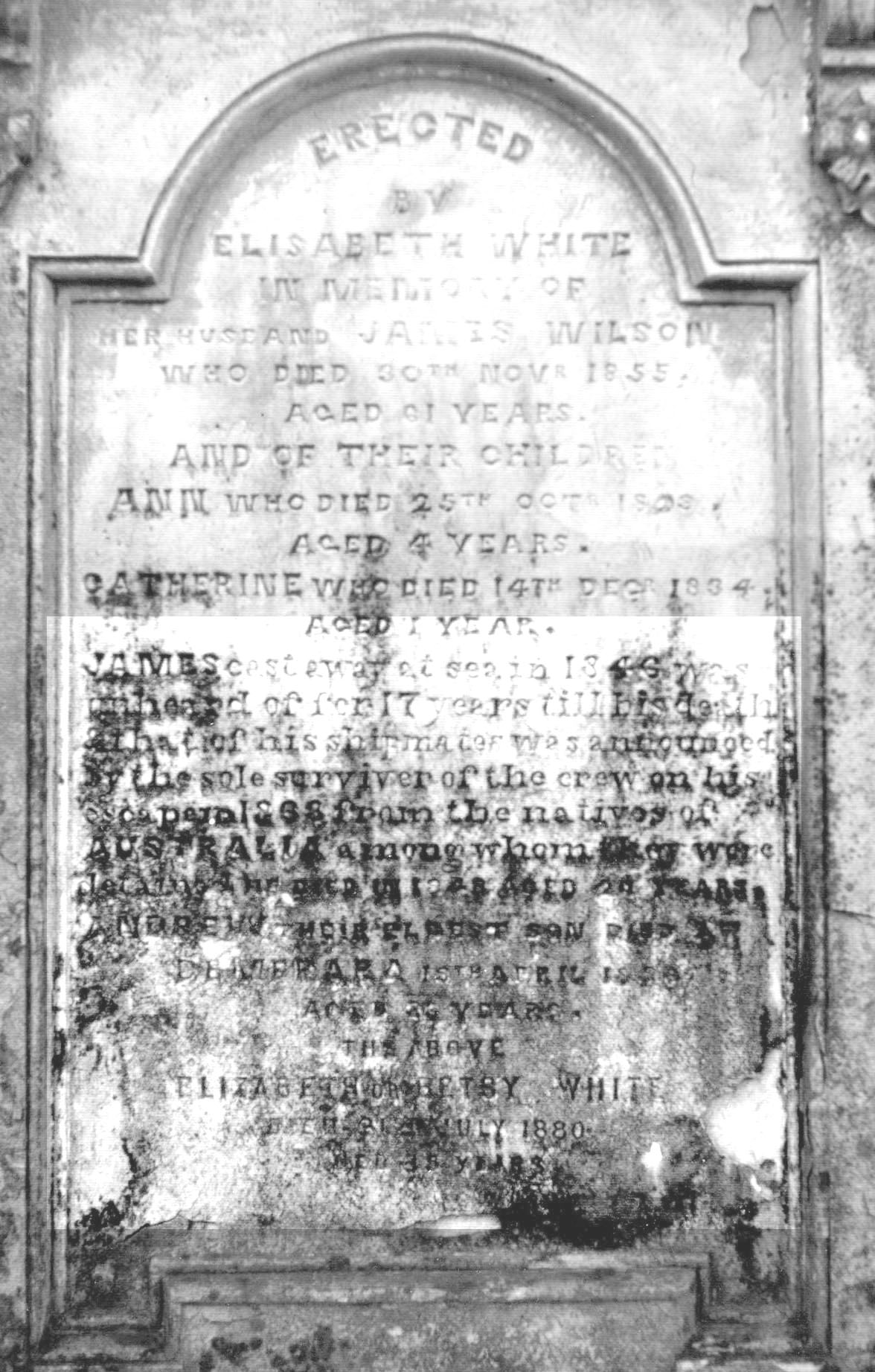
vessel or crew until now, when the only survivor, after living seventeen years
with a tribe of aborigines has made his way to a white settlement, and given the
narrative we subjoin, and which is one of the most extraordinary stories of shipwreck
and adventure ever published:-
LOSS OF THE PERUVIAN OF DUNDEEEXTAORDINARY
SUFFERINGSAND DEATH OF MANY OF THE CREW ON A RAFT A SURVIVOR 17 YEARS AMONG THE
AUSTRALIAN BLACKS.
The Kennedy correspondent of
the RockhamptonBulletin (Queensland
paper) writes:-
News reached us yesterday by
the Murray of another "sensation", which will interest the curious. A
man having all the appearance of an aboriginal suddenly presented him selfa few
days since before the astonished gaze of one of Mr.Antill's shepherds, at an
outstation on the Burdekin, who was about presenting his gun when he became
aware that the intruder was not a bona
fide nigger.
The new comer appeared, by
the shepherds account, to experience the greatest difficulty
in expressing himself, having evidently forgotten his mother tongue. The tribe
amongst which this man has been located for so long a period have seldom
ventured down so low upon the coast, but having done so upon this occasion, and
the tracks of horses and sheep arresting his attention, he determined to follow
up this road to liberty, which he finally succeeded in accomplishing. Upon Mr.
Antill's shepherd giving him a coat and trousers, instead of putting them on to
cover his naked legs, he threw them across his arm like a black fellow.
Little could be extracted
from him, as he appeared perfectly stupid. This feeling will probably disappear
when in contact with his own race.
Writing again on the 25th
February, he says:-
A few days ago the castaway
seaman to whom I referred in my last, as having been so long with the blacks,
came into town, and I am now able to correct and extend my former statement.
His name is James Morrill, a native of near Maldon, Essex county England: he
was shipped onboard the Peruvian, at Sydney, as a seaman not carpenter, as I
formerly stated. By the account of James Morrill, the barque Peruvian, of
Dundee, Captain Pitkithley, with a crew of fourteen in all, including the mate
the Captain's brother and seven passengers:- Mr.
Wilmot, wife, infant child and nursemaid, Mr. J. B. Quarry and child, and Mrs.
Pitkithley, the Captain's wife:- twenty two in all, sailed from Sydney for
China,on Friday, the last day of February 1846. The following day it began to
blow fresh, and continued to increase in violence, till in the fore part of the
week it was blowing a gale, and by Wednesday and Thursday their canvas was all
blown away, and they were under bare poles. On Friday, a week out the wind
moderated, and on Saturday the vessel was again put under canvas, and laid on
her course, the Captain giving special instructions to keep a good look out for
"broken water", as since the commencement of the storm he had been unable
to obtain any observations, and was afraid of falling on reefs.
Between two and four o’clock
the following morning Sunday, the attention of the second mate, then on watch,
was directed to the sea ahead, and requested to bring the ship to the wind.
This he declined to do until he had called the Captain. As the second mate
returned to the deck from the Captain's stateroom, the ship struck, and at the
same time the sea swept over her, carrying away the starboard quarter boat, and
taking the second mate overboard, who was never seen more. The second sea sent
the vessel high on the reef where nothing more than the spray of the waves
broke over her.
The Captain immediately hurried
to lower the remaining quarter boat which scarcely reached the water ere it was
stove to atoms. One boat only then remained on board, and that was in bad
repair. This the Captain also hurried out in lowering about daylight a wave partly
filled it with water, and none of the crew being willing to get into the boat
to bail her out, the mate himself went, and immediately after the stern of the
boat was taken out, the fore-tackle unhooked, and the painter also parting, the
strong current setting over the reef carried the stove boat and the unfortunate
mate beyond the reach of any assistance from those remaining on the stranded
ship.
First and second officers and
all their boats gone, the hull still stood firm under them, on the top of the
reef and it was proposed to stick to the hull meantime, and use some of the
boards they had in the ship, and such other timber as they could use, and build
a boat of capacity enough to take them all to a place of safety, but the Captain
did not join with this view, and no party being willing to go into the undertaking,
the proposition was given up.
The spars, rigging, casks,
&c., of the vessel were then put in requisition and a raft was constructed.
To this they transferred themselves and a few such things as they could obtain
from the ship.
They had one cask of water and
some soup and bouilli in tins for provisions. The bread had all been soaked
with salt water. They intended to remain longer by the ship in hopes of getting
more supplies out of her, but the swell and the current parted their lashings
to the hull, and they were a drift in the coral sea on
a raft.
The stock of provisions and
water was very scanty, and dealt out with the most sparing hand, but they made
a unanimous determination that come what would, no proposition should be ever
made or entertained to sacrifice any one as food for the others.
Twenty two days passed and
they were still all alive, and that morning they had seen the topsails of a
brig, only to watch them disappearing as the breeze freshened with the opening
day. Shortly after Mr.Quarry died, and his child, Mrs. Wilmot and child, and
the nursemaid followed, afterwards the carpenter, the cook, two seamen, two
apprentices, and two black men, also died on the raft.
One day they were entangled
in the Barrier Reefs, but the weather was true, and with some labour and
difficulty through the day, in the evening they were afloat on the inside of
the reef. Two days afterwards they sighted what Morrill now knows to be Cape
Upstart, the first land they had seen. This, however they
soon lost sight of, and some two days after they sighted Cape Bowling Green.
This they soon lost sight of, drifting backwards and forwards in the tide
currents along the coast and brought to terrible extremities for both water and
food, it seemed as if they were worse situated in sight of land than on the
open ocean.
At last, however, forty-two
days from the time from the time they had left the ship, the raft drifted
ashore on the north eastern side of Cape Cleveland. The Captain, and his wife,
Mr. Wilmot, Millar the sailmaker; Golley, seaman: Wilson, apprentice, and James
Morrill, seaman- seven in all, reached land alive.
They found no natives at first
landing. Water they found and shellfish, the only supplies they could obtain to
recruit their debilitated frames. Anything they could eat was now acceptable.
Throughout the voyage on the raft they had eked out their scanty supplies by
sea fowl caught in the light on the raft, where the birds sought lodgings and
at different times during the latter part of the voyage three sharks, of the
crowd which always hang about the raft to prey on dead bodies, were caught and greedily
eaten raw as they were.
The blood of the birds when
they could be obtained had been a great relief with their scant supply of
water. Once ashore Mr. Wilmot and Gooley were too far gone to make any exertion
and with only strength enough to crawl to the fresh water then lay down and in
a few days breathed their last. Millar found a native canoe on the beach, and
with this he went away to see what he could discover. He never returned. His
body was found some time later by the native blacks.
Four now only remained. The
boy Wilson was scarcely able to walk from a severe boil on one of his legs.
They sheltered themselves as best they could in a kind of cave in the rocks,
some distance from where they first landed, and on the other side of the cave,
subsisting on their
shellfish as best they could, till fourteen days had passed on
shore, when first they heard indications of the presence of blacks, and found
they had been observed.
Mrs. Pitkithly was first to
hear of the presence of the blacks in the vicinity. Her husband and Morrill
were both absent at the time. On their return she was telling them what she had
heard when, all at once, she heard the same sounds again, and stepping out a
little, on looking round, they observed a number of blacks among the rocks a
short distance off.
The blacks were decidedly the
most frightened in appearance. Mutual signs were made to approach, and at last the
blacks came amongst the whites.
The whites soon became separated
from each other, each becoming a subject for an astonished group to examine.
from the crown of the head to the soles of the feet each was carefully
examined, clapped and felt, and made the subject of a multiplicity of strange
and uncouth expressions and exclamations, until, having fully satisfied
themselves, even to the extent of the sex of the various whites, the four
strangers felt themselves again at liberty to look around them for themselves,
when, to their mortification, the few things they had been able to save from
the raft and store up in their cave were found to have been carried off by the
blacks, and divided among the crowd.
Nothing was left. In the
meantime they had managed to make the blacks understand that they had come from
the sea, where they had lost their ship, and that they were now hungry. The
blacks seemed to express sympathy by their exclamations- brought out some of
their food, and made signs that away in a certain direction there was plenty more.
Night came on, and whites and
blacks rested on the same ground. Next morning all started for the blacks big camp. As it was with difficulty the boy could
walk one of the blacks set the boy a straddle over his neck and walked off with
him far in advance of the other whites who made but slow progress among the
rocks.
Once or twice on the route
they fell in with blacks different from those they had firsts met, and with
each new arrival the whites had to submit to fresh examinations. Occasionally,
at first, the whites would alarm themselves by imagining that the examining and
chattering blacks were excited by cannibal considerations, but they soon
understood it to be only a matter of curiosity.
On arrival at the big camp
they were supplied with food, but carefully covered with boughs to conceal them
from the general gaze. Blacks from all round kept
coming in, and a grand display was made with the articles which had been found
with the whites.
Clothes, books, and papers
were torn to pieces, and the fragments sported in one way or another on the
persons of the several blacks assembled. At last the whites themselves were
brought out for general exhibition.
By some they were observed
with curiosity, while others ran away in a fright. After a short time the
whites were conducted to huts prepared for them. Food, such as they had was
also furnished and small fires had been set for them after the "native
fashion".
For a long time parties of
blacks kept coming from a distance to see the white strangers but the four
unfortunates had become part of the general public.
They were shown how to obtain
their food, and supplied with a share of what was to be had. Although they were
treated with a good degree of kind indulgence such as it was, still they began
to suffer fearfully. The few rags of clothes left on them rapidly wore away.
The men became naked as the blacks. Till the time of her death however Mrs.
Pitkithley managed to patch together something for a covering.
Exposed, wandering from place
to place, sleeping without shelter, and digging in swamps, tried them sorely, rheumatism
and rheumatic sores began to affect them. Hitherto the four had still been
together, now unable to supply themselves and in the dry season obtaining of
food becoming more difficult, they were divided into three different parties-
Mr and Mrs Pitkithley remaining still together.
About two years after
landing, the boy Wilson died, near to the western side of Port Denison harbour
and some few months after Mr and Mrs Pitkithley died, near two little hills,
close by the south side of Upstart Bay- Mrs Pitkithley surviving her husband
about four days.
Morrill was at this time with
a separate party, and wasn’t present at the death of any of his white
companions.
Thus, in less than three
years, of all on board the Peruvian when cast away, James Morrill remained alone.
Since that time, till nine or ten months ago he has generally lived in the
neighbourhood of Mount Elliott.
Some four years ago he heard
a report from the blacks of a white man being killed in the interior -one or
two horses he had got away but the story was very indefinite, and Morrill had
no means of ascertaining the truth or accuracy of it.
At different times he heard
of vessels being on the coast and once he saw a barque passing in full view,
but in no case had he any means of communicating with them. Some twenty months
ago shortly after the settlement of this place he
first heard of whites being in the neighbourhood and nine or ten months ago he
came to live with a friendly party in the country between Cape Bowling Green
and the Burdekin River, with the object of having a better opportunity of coming
in contact with the whites.
Still the precise locality where
the whites might be found it was impossible to ascertain. The blacks, friendly
to him, did not contemplate his leaving them, and for his own security from
others unfriendly he was never free nor able to go off
alone on an expedition of discovery, or, in fact for any other purpose.
The general and
undiscriminating destruction of the blackmen by the white settlers and the so
called native police also frightened the blacks, whenever they found themselves
in the neighbourhood of the strangers, and besides rendered the approach to the
whites dangerous to any one with the appearance of an aboriginal.
Thus weeks and months passed
without any opportunity of communication, till in the latter part of January,
the party he was with made a kangaroo hunt close to Mr. Antill's station and
Morrill got detailed with a party of women to keep a lookout for whites, one of
the women strolled off to some distance, and on returning told Morrill that she
had seen a white man's hut. Morrill said he, too, should like to see it, and
requested her to show it to him, which she started off to do, showing the
direction of the hut. On the way they came in sight of some sheep. Morrill concluded
that the whites could not be far off, remonstrated saying on his proposing to
go up to them the women [.....]they would kill him,
and [......]away back to her party. Morrill went to a waterhole and washed
himself so as to appear as white as possible and went on in the direction of
the sheep but without seeing any white man till he came to the sheep yard, and
in sight of the hut when he heard voices inside the hut.
At that instant, Morrill says
he felt confused and alarmed, at first almost impelled to run away again. That,
however, he would not do. But what was he to do or say-he could scarcely think
of a word of English-when, at last, getting up as high as he could on some
sticks in a fence looking towards the hut, he called out a sailor's salutation
he had often repeated to himself when alone- "What cheer, shipmate"
One man looked out of the hut,
and immediately called, "Come out and bring the guns, Wilson. Here's a
naked man on the fence that's white or yellow but he's not black". Morrill
answered, "I am a shipwrecked sailor, you would
no shoot a British subject". They then went into conversation with him,
took him into the hut and gave him some bread and offered him clothes.
The bread, he says, at the
time he could not swallow, and English words it seemed almost impossible to
find -they [...] would stick in his throat-and the men seemed to look on him
with suspicion as some sort of bushranger: and when he declined the clothes
saying that he intended to go back that night to the blacks, and that he would
only be plundered of them. When he returned to the camp, the men undertook to
warn him in a threatening manner of what they would do to him if he proved
false to them, and brought the blacks upon them.
He then returned to the
blacks, who anxiously questioned him about all he had seen. He states that he
has no doubt that the blacks there know the true force of the whites at the
sheep station, enraged as they were by the repeated unprovoked massacre of from
fifteen to twenty of their number, they would have rushed to the hut that very
night and killed every man there. As it was he took the liberty of very considerably
overstating the force of the whites-told them the whites could kill them all
long ere they could reach the whites, and advised them to get away to a greater
distance from the hut for fear the whites should shoot more of them, which
advice they hurried to adopt packing up as fast as they could some four miles
farther, where they camped for the night.
When he told them that he
intended to return to the whites, they at first understood that he would be
absent some three or four days only, and begged him to talk to the whites not
to shoot them as was the case now. And when he told them that he was going
along way off to see a great many whites, and would begone three or four moons,
they said he must be going to leave them altogether.
Some, in anger, told him to
go and be drowned with the rest of the white men years ago a great flood had
destroyed many of them, and for some time it has been a favourite idea with
them that in this rainy season a great flood will drown all their white
troublers, with their horses, cattle, and sheep, while others lamented that he
would be too far away to do anything to save them from the whites but begged of
him to induce the whites to let them have at least the swamps and salt water
creeks undisturbed, and they would give the upper river to the whites.
With much lamentation on the
part of many of his old and tried friends, the following morning he ended an almost
seventeen years residence with the blacks, and left their
camp. Since then he has been living with the whites on the Burdekin, till last
week he arrived in Bowen, where he has been very well received.
The matter of some £50 has been
made up for him here, and to-morrow he leaves for
Rock-hampton by the Murray.
James Morrill is far from
illiterate, and appears amongst us as plain unpretending, and kind-hearted man,
intelligent reasonable, and moderate in his views, and expressions, even where
evidently deeply interested, and the very faint taint which hangs about him
after so long a solitary association with savages, must be a matter of surprise
to every thinking and observing man with whom he comes in contact.
In depicting savage society,
he has but few bright tints to use. Amongst them no law of the community
protects the individual. Personal prowess, personal friendship, and fear of the
private avenger are the only protection from personal enmities, which are often
bitter, and occasioned by trifling causes. A large proportion of the men , he says, come to violent ends when found at
disadvantage by personal enemies. He, too, had many personal enemies who would gladly
have taken his life, but they were kept in check by his personal friends, who
were numerous and powerful, and who threatened dreadful vengeance should
mischief befall him, and some of whom always kept his company.
Their women, who appear to be
the property of the father while young, and of the men who obtain them
afterwards, are very unequally divided among the men. Some men have several; in
one instance he knew as many as nine to one man, while others are unmated. They
are jealous of their women, and their women are the occasion of many of their
bloody and cruel quarrels.
Very comfortable huts they
might have with a little labour, but they are almost continually shifting from
place to place and will seldom take the trouble to procure a shelter beyond a
piece of bark to keep the rain from their heads in wet weather.
They practice burning their
dead, and Morrill says they often cook and eat the flesh of persons dying sudden
or violent deaths, whether friends of foes, but denies that they kill for the
purpose of eating them.
Food enough they generally
procure without much difficulty, except in stormy weather, when they would
rather starve than go after it. Fish, roots, principally found in swamps or wet
ground, the fruit of a dwarf palm or pantannas, especially abundant on Mount
Elliot, kangaroos and other animals they could catch. ducks,
turkeys, and scrub turkey's eggs, with a variety of reptiles- snakes, lizards
and grubs, as also wild honey, were to them articles of food: when obtained in
sufficient quantity they only eat one article at the same meal.
Their drink was water, and
upon clothes they set no value but as temporary ornaments, to be hung about
their person in anyway. James Morrill's aim and wish seems to be to locate
himself in the neighbourhood where he has so long lived, and use his best
influence to benefit and protect the aboriginal blacks, a large party of whom
have so long benefited and protected him, and at the same time to make the
white settlers feel secure.
In this he thinks he could
exercise much influence when his acceptance has extended. He is now, as I understand
him, on his way to Brisbane, to try and ascertain in what way and how far the
Queensland Government and Queensland people will further facilitate this
object-an object noble in itself, creditable to him, and certainly well worthy
the consideration and patronage of the Government of a Christian people.
The Bulletin:- In common with several other gentle-men, at the special
invitation of Mr. J. Jackson, police magistrate we attended at the Court-house,
on Thursday morning last, to hear the revelations of James Morrill, the
individual so suddenly reclaimed to civilisation and incipient notoriety after
a residence of seventeen years with the coast blacks scarcely habituated to
white associations though apparently possessed of a considerable amount of
common sense and appreciation of fun, James Morrill was the cynosure of more
than a dozen curious spectators each anxious to obtain information and
perpetually putting the most varied questions.
In appearance Morrill fully
bears out the idea of a man outliving the hardships he has been exposed to. Of
average height, deep chested, well limbed, and determined feature beyond a more
than ordinary sunburnt appearance, and some frightful evidences of healed
rheumatic sores, chiefly on his elbow joints and sides; he bears no outward
sign of his wild career, save in a somewhat rapidly shifting glance, and listliss
gait peculiar to savage life. He testifies to the absence of endemic disease
among the natives removed from intercourse with the whites, and says that the
rheumatism alluded to was the only bodily infliction he had to endure.
Upon his shoulder he bears
the marks of a few slightly indented cicatrices a species of aboriginal brand
to the extension of which he declined to submit. He denies the existence of any
form of religion among the natives, or even the conception of a future life,
beyond a vague belief that at death they jump up a white fellow and that a
species of retributory justice their present wholesale destruction is effected
by the incorporated forms of former vanquished enemies.
He assures us that the blacks
treated both him and his unfortunate shipmates with unvarying kindness, protecting
them from every attack, and offering neither injury nor insult to the
unfortunate woman thrown upon their mercy for nearly two years.
Morrill testifies to the
existence of occasional cannibalism founded rather upon a superstitious idea of
embodying the virtues or physical capacities of a de-ceased friend or enemy,
than from any desire for unnatural food, and also states that a proportion of the flesh dried is
carried about as an amulet. The natives suffer chiefly from rheumatism, are
very jealous regarding their wives, which induced Morrill several offers to
provide him with so causes belli
They are occasionally
attacked by alligators while hunting, and objected greatly to Morrill's accompanying
them, or journeying anywhere without a guard to protect him from hostile blacks
and his own ignorance and imprudence.
Dundee Advertiser
Friday May 22 1863
Stranger than fiction
[Follow-up
editorial article on the Peruvian story - there is obviously poetic licence as
well as in accuracy "...Miss Ruxton,
who was it was whispered, was to be the bride..." the couple had
married in Dundee in October 1838 some three years before the vessel was built.]
(The letters
to the paper were checked for the following days to see if there was any public
comment - however a murder trial was taking up considerable space - paper very
difficult to check on micro film and it is an exceedingly slow process only
really viable if the date of the item can be assured.)...........
In 1841 a fine
new barque, the Peruvian, laying our docks, about to sail on her first voyage. Her builder was Mr Alexander Stephen, then of
Arbroath - her owner Captain Pitkethly of Newburgh- and her commander the Captain's
son.
The builder, then a young
man, was destined to achieve fortune and distinction in his vocation -the
owner, an aged sea Captain, was a man who had already achieved both the commander,
a handsome and fine spirited youth, the worthy son of a worthy father, was
newly married to the only daughter of his landlady -the ship, a tidy, little
barque, was an object of interest at the shore.
In our little nautical world
of Dundee the outfit of the good ship Peruvian was an event. Veteran seamen
sauntered about the docks watching the handi work of sail makers, riggers, and
painters, and complimenting their brother veteran the owner on her smart
appearance. Younger seamen sympathised with the young commander in his pride of
command, and in the prospects of prosperity that lay before him; and, among the
maidens of the town, there was some secret envying of Miss Ruxton, who was, it
was whispered, to be the bride of the comely and highly esteemed young Captain Pitkethly,
and who might go abroad with him in his fine new ship.
The old man had many friends,
the young man was a general favourite, and when the hour for departure came,
and the new white sails were hoisted, there were nervous grippings of hands,
and those goodbyes, so tremulously gruff; which mark the generous warmth of the
seaman's heart. And attest his devotion to his home. In the little world of the
Ship Inn, at Dundee, where Captain Pitkethly lodged, and in that other little
world at his father’s house at Newburgh, the bustle and excitement of outfit were
followed by the sorrow of parting. .............The veil is lifted, and the
uncertainty of which old Captain Pitkethly so often and so feelingly complained
is changed for a certainty more shocking even than that doubt which formerly
shrouded the fate of the Peruvian's crew.